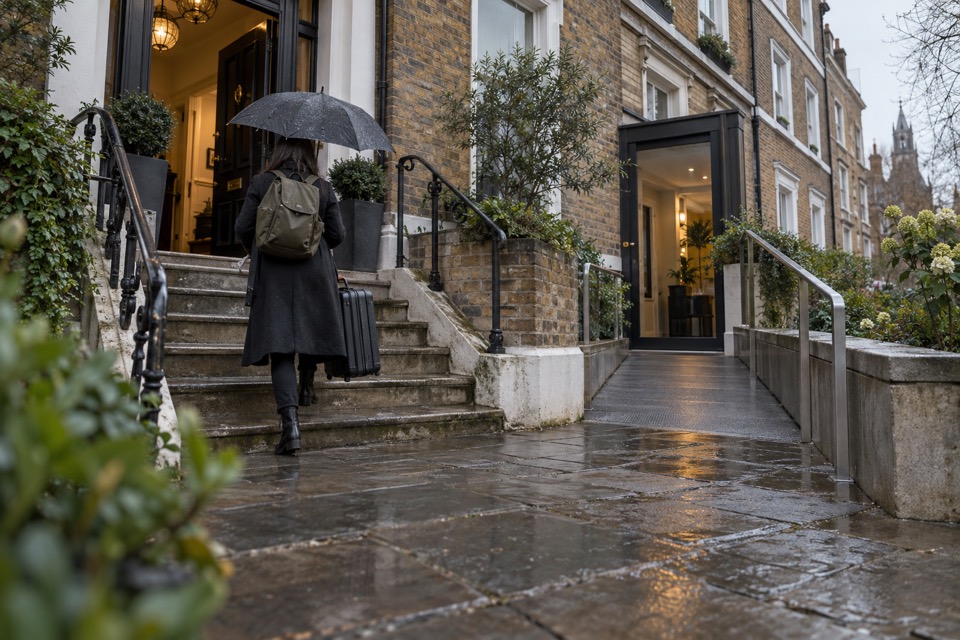
Arrival · beyond the front-door photograph
A listing photograph may show front steps while omitting a level side entrance. Ask for its hours and call procedure. For a late check-in, verify that someone is available to open it at that time.
Movement · somewhere to fold an umbrella
A small doorway becomes tighter with rain, luggage or mobility equipment. Check the drop-off side and door swing. Treat a station transfer as a continuous platform-to-exit route, not a single lift symbol.
Food · the downstairs table
An older restaurant may place ordering and dining on different floors. Ask about same-floor tables and the route to the toilet as well as the menu. State a need to avoid stairs directly in the reservation note.
Stay · a room’s own heating controls
Rooms in a building with shared heat storage may still have different controls and charges. Ask how settings work, whether heating changes late at night, and whether displayed costs apply to the room or the whole home.
Shared storage · which floor is it on?
An unattended locker at the foot of basement stairs may be difficult to reach. Ask whether a delivery can be handed over at the entrance or held by staff. Do not use a shared passage as temporary luggage storage.
If plans change
If the side entrance or lift is closed, request another handover point before carrying luggage on the stairs. An accessibility marker on a map does not guarantee current conditions.
Common questions
Does a lift mean step-free?
There may be steps before or after it. Check the complete route.
Must I give a diagnosis for an access request?
Start by describing the route you need. This guide does not determine legal documentation requirements.
Are heating charges uniform?
Base charges and usage terms differ by listing. Review both the detailed costs and the operator’s response.