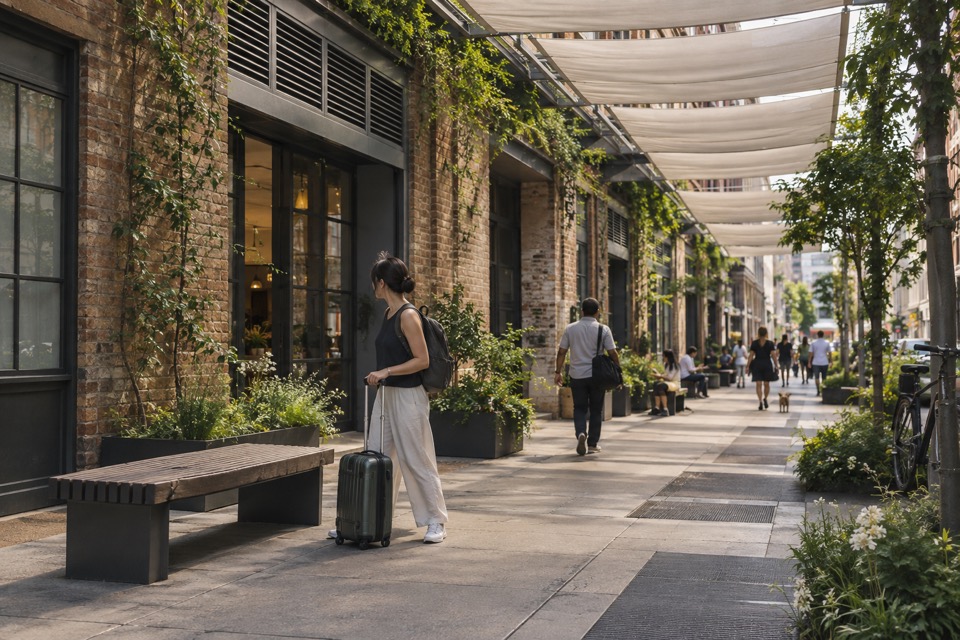
Arrival · an entrance, not just an address
Ask for the street that holds the door as well as the booking address. In this Lower Manhattan scenario, a building’s drop-off, guest entrance and goods entrance may face different streets. Decide where luggage will wait before exploring.
Movement · after the arcade closes
An indoor-looking line on a map is not an all-day passage. Check the cooling-corridor notice and mark an exit that stays accessible after shops close. A route with somewhere to sit may suit you better than the shortest route.
Food · an order is not a seat
Buying lunch from a pickup window does not grant access to the lounge next door. Check seating and outside-food rules separately. Keep the receipt’s container-return terms, including whether another branch accepts returns or they can wait until another visit.
Stay · what cooling includes
For a monthly home, separate base cooling charges from extra use. Room controls, shared-arcade access and laundry drying may have different terms. Use the home’s cost breakdown to prepare questions for its operator.
Shared space · people and deliveries
A delivery robot’s waiting bay is not a place to unpack. Step clear of its marked queue when taking a call or opening luggage. Meet a companion at an indoor bench rather than directly in the doorway.
If plans change
If rain intensifies, confirm the accommodation’s street-level entrance instead of following basement links indefinitely. Save the rain-detour notice and follow on-site closures around pooled water.
Common questions
Does a room booking include the cooling arcade?
The building and arcade can have different operators. Ask what access the accommodation includes and when it ends.
Is the exit unchanged in rain?
Some low entrances are rerouted in this rain scenario. Obtain the street-level alternative in advance.
How is this different from a home listing?
This guide explains questions to ask during a visit. Scenario floor areas and contract terms live in the individual home listings.