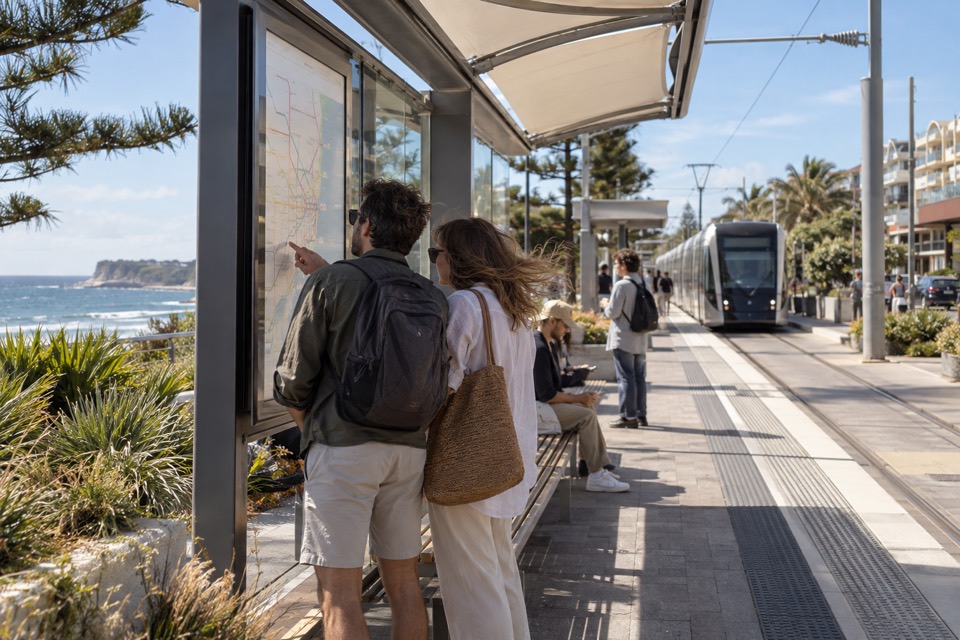
Arrival · the weekend stop
In this scenario, a route can use different pickup points on weekends. Check the stop notice for the visit date rather than relying on a weekday sketch from the host. Agree whether to meet on the coastal or inland side.
Movement · the way back before the view
Before a coastal walk, look at the route up to the inland tram as well. If wind or a closure changes the plan, the scenic path may not be the easiest return. Check steps and gradients separately.
Food · the shade moves too
An outdoor table shaded at lunch may be exposed later. Ask whether an indoor table can replace it and where loose belongings can be stored out of the wind. Decide the meal time before choosing the seat.
Stay · what a coastal room needs
A sea view and a window that keeps wind out are different qualities. Ask about ventilation with windows closed, salt-cleaning schedules and outdoor-equipment storage. If quiet matters, compare homes a block inland too.
Shared space · returning with wet gear
Plan compact storage so wet equipment need not be spread across a tram or corridor. Check cleaning expectations and handover times for rentals. Follow the item’s own instructions for sand and salt removal.
If plans change
If coastal access is restricted, follow on-site notices and check the inland stop. Prioritise a route that works for your companion and bags over completing the original walk.
Common questions
Is the coastal route unchanged at weekends?
The current scenario notice changes some pickup points. Check against the visit date.
Does a sea view mean a cooler room?
A view does not establish indoor conditions. Check shading, ventilation and windows.
What if the coastal walk is cancelled?
Look at inland transport and city culture listings. An outdoor plan does not have to be replaced by another outdoor plan.