Arrival · booker and visitor
If a family member made the booking, specify who receives on-site messages. Handling confirmation texts does not mean making every decision for the visitor. Keep room-entry codes separate from contacts for visiting support.
Movement · break up the interchange
One transfer across a large station can be more demanding than two smaller stops. Choose somewhere to sit and an exact meeting exit before filling the day with appointments. Include the return point for any borrowed equipment.
Food · what a translation leaves out
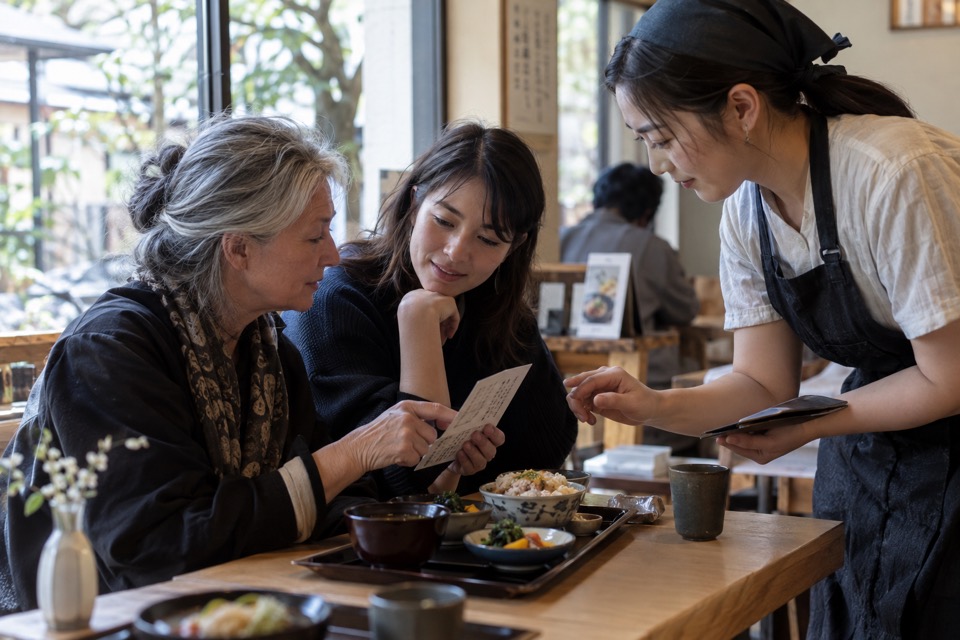
A translated ingredient name may say nothing about broth or shared utensils. Show a short written list of what must be checked and ask staff directly. Neither image recognition nor automatic translation guarantees allergy safety.
Stay · visiting-support hours
A care-call device in a room does not promise a person will always attend. Ask about response hours, night contacts and handovers without the companion. Distinguish accommodation information from the separate support arrangement.
Shared controls · easier for the actual user
When enlarging text on a shared display, show where the next user can reset it. Leave time for the visitor to read and choose instead of pressing every button for them. Visitor instructions need not be stored permanently in a personal account.
If plans change
If the companion is delayed, first ask whether the contact can be changed on the existing booking. Explain using the reservation number and visitor’s name rather than creating another account on arrival.
Common questions
Where can equipment be borrowed?
Read the Tokyo equipment notice for handover terms. This page does not confirm stock or a booking.
Is showing an automatic translation enough?
Reconfirm ambiguous ingredients or support needs with staff. An explicit acknowledgment matters.
Can the visitor check in without the companion?
It depends on the accommodation’s identity and support handover terms. Ask in the visitor’s name before arrival.