Health & ageing
Who attends when family-care orientation becomes paid?
A Houston orbital-worker support programme is piloting payments for relatives’ orientation time.
2077 / NEWSROOM
A Houston orbital-worker support programme is piloting payments for relatives’ orientation time.
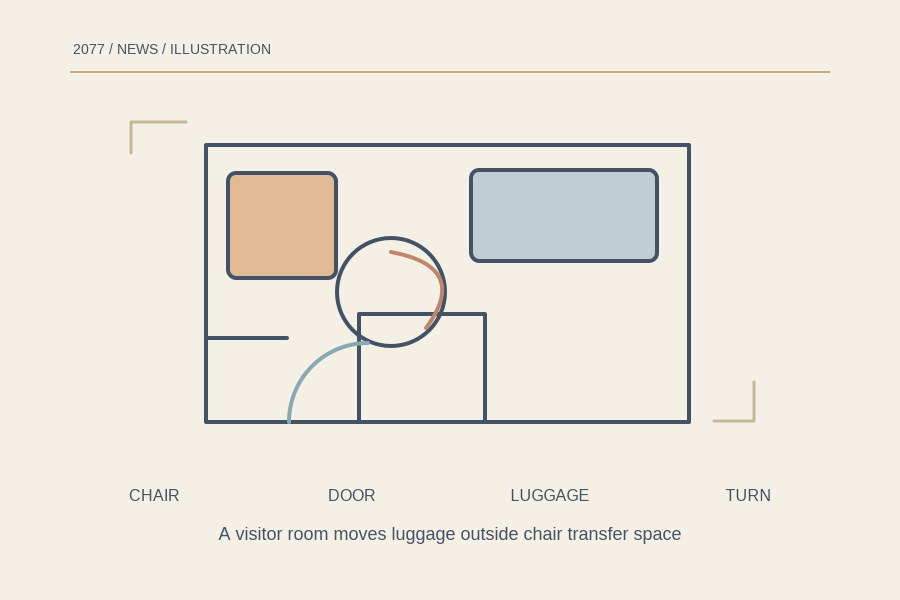
While a guest unpacked, the unfolding bed took up the room’s widest clear patch. The room briefing now shows who starts each movement and where a bag can wait.
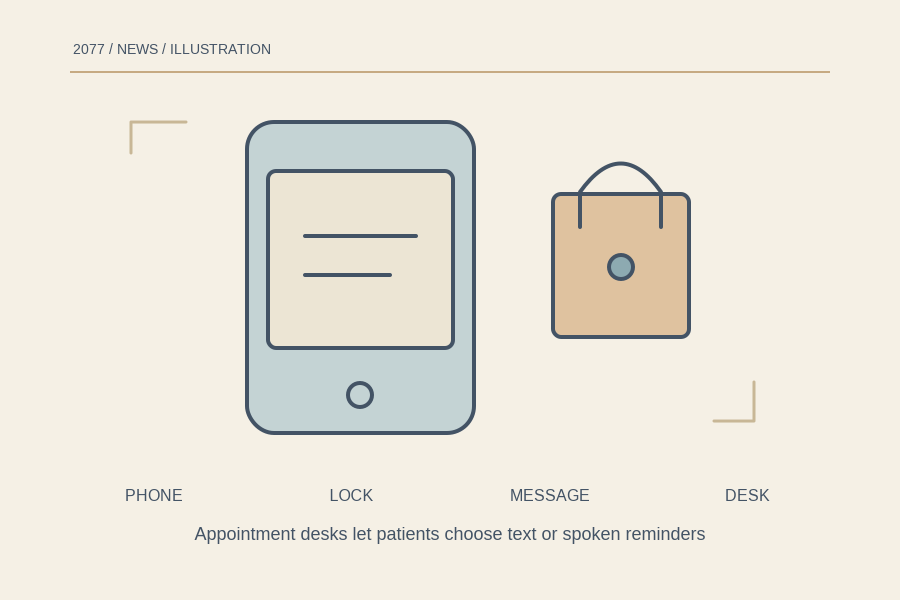
The driver needed a pickup time but received the full appointment summary. The desk split the transport message from the patient’s copy and recorded who should get each update.
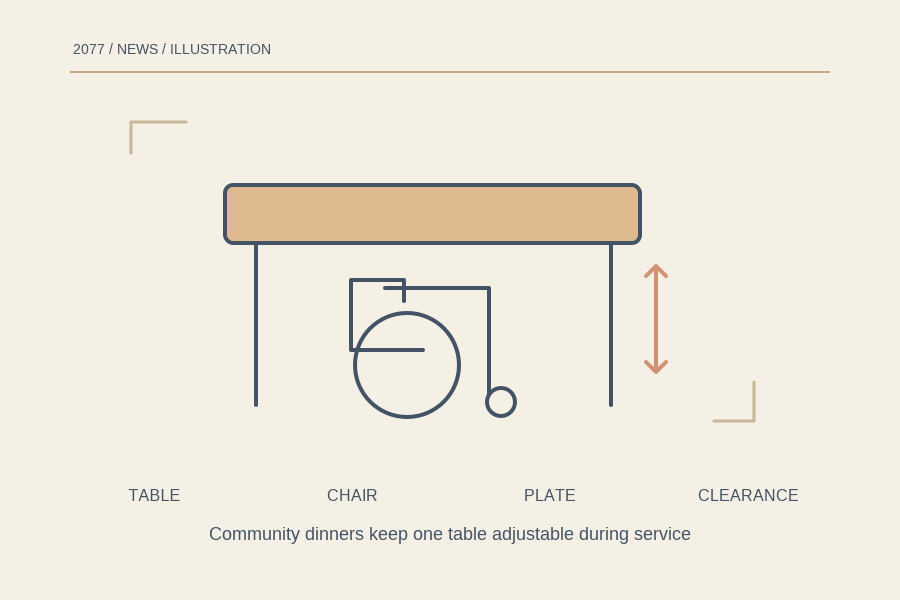
At a well-fitted table a diner still had to put down a spoon when the surface began moving. Mid-meal adjustments now wait for the person at that place.

A passenger switched off the seat fragrance and still caught a neighbour’s scent. An unscented row now appears in the timetable alongside individual controls.
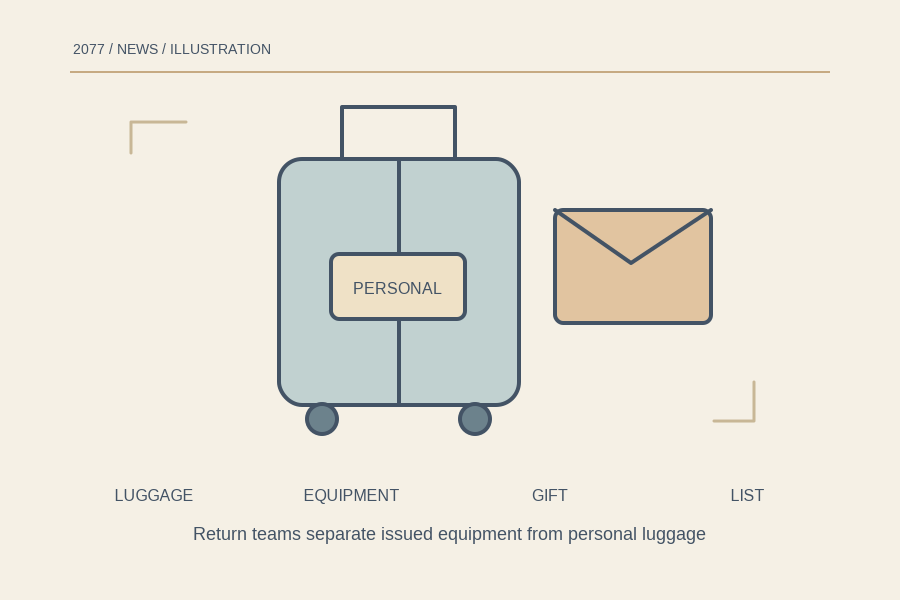
The Earth arrivals desk received the bag while the team still awaited its equipment file. The family baggage receipt and the research handoff closed at different times.
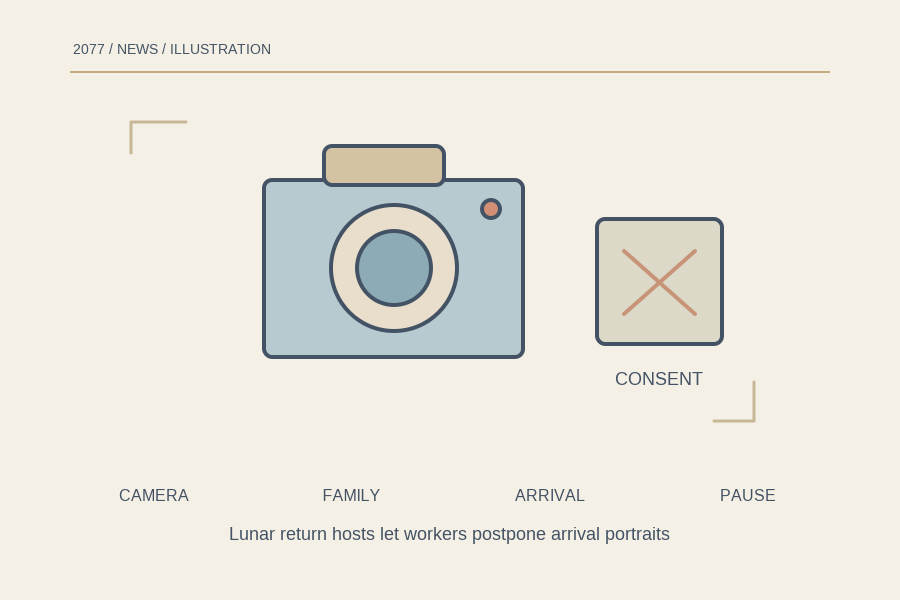
Automatic retouching straightened an unfamiliar stance in a family reunion picture. The family chose the original, prompting the booth to show both versions.
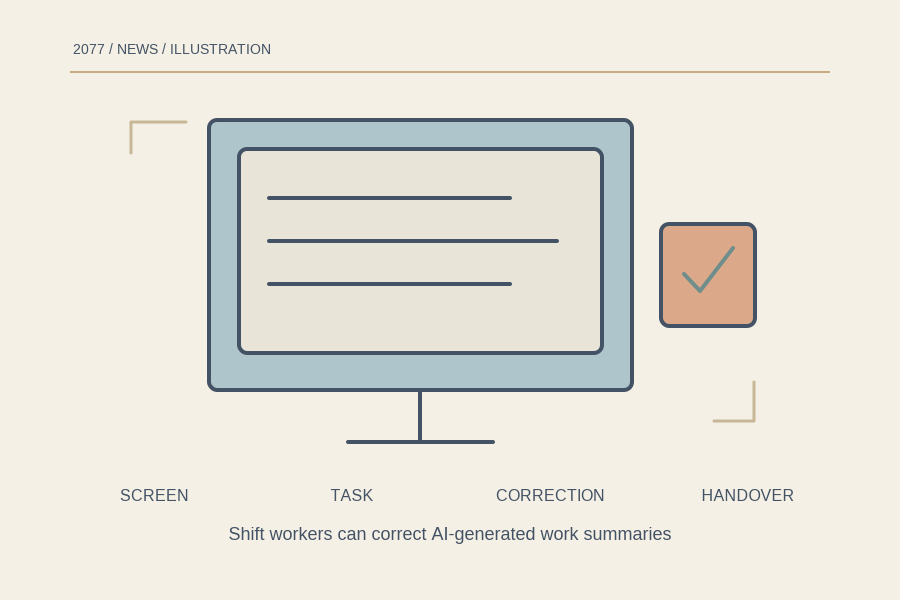
A robot’s completion timestamp omitted the wait for the next worker. The shift submitted the gap between task finish and actual handover for review.
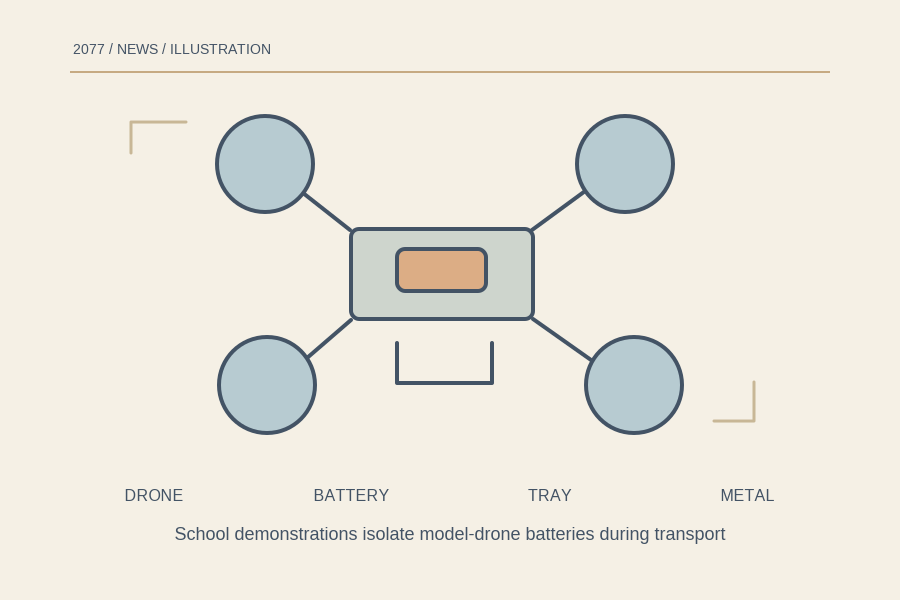
A school exhibition kept an aircraft that failed to fly. Beside it, students show the original test goal and the design choices they changed by hand.